Self-Defense Strategies in Survival Scenarios
Did you know that nearly 70% of people feel unprepared for a survival situation? That’s a staggering number, especially when you consider that self-defense can be the difference between life and death. Whether you’re lost in the wilderness or facing an unexpected threat in an urban environment, having a solid self-defense strategy is crucial. Let’s dive into some unique self-defense strategies that can help you navigate these high-stakes scenarios.
Understanding Your Environment
Before you can defend yourself, you need to know your surroundings. Think of your environment as a chessboard. Each piece has its strengths and weaknesses. Here’s how to assess your situation:
- Terrain: Is it rocky, flat, or densely wooded? Use the terrain to your advantage.
- Obstacles: Look for objects you can use for cover or to create distance.
- Escape Routes: Always have a plan for a quick exit. Know where you can run to safety.
For example, in a forest, trees can provide cover, while in an urban setting, cars and buildings can serve as shields. 🏙️

Situational Awareness
Imagine you’re a hawk soaring high above the ground, scanning for movement. That’s the level of awareness you need. Situational awareness is about being alert to your surroundings and recognizing potential threats before they escalate. Here’s how to sharpen your senses:
- Observe: Pay attention to people’s body language and facial expressions.
- Listen: Sounds can be telling. Is someone approaching? Are there unusual noises?
- Trust Your Gut: If something feels off, it probably is. Don’t ignore that instinct.
In a 2018 study, researchers found that people who practiced situational awareness were 50% more likely to avoid dangerous situations. That’s a compelling reason to stay alert!
Verbal De-escalation Techniques
Sometimes, the best defense is a good offense—of words! Verbal de-escalation can diffuse a tense situation before it turns physical. Think of it as a Jedi mind trick. Here’s how to wield your words:
- Stay Calm: Your tone can set the mood. Speak slowly and clearly.
- Use Open Body Language: Avoid crossing your arms or appearing aggressive.
- Empathize: Acknowledge the other person’s feelings. This can lower their defenses.
For instance, if someone confronts you, try saying, “I understand you’re upset. Let’s talk about it.” This approach can often lead to a peaceful resolution. ✌️
Physical Self-Defense Techniques
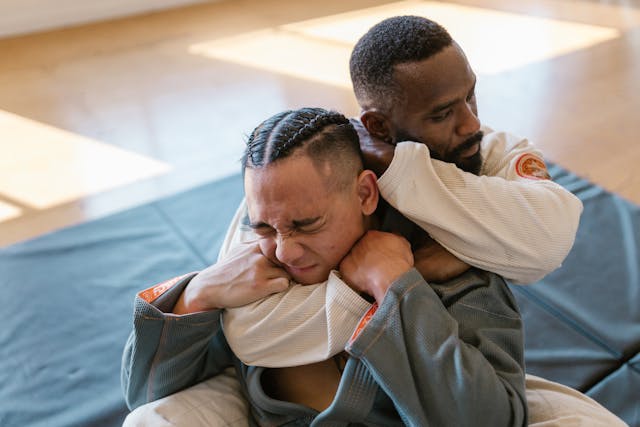
When words fail, it’s time to get physical. But don’t worry; you don’t need to be a black belt to defend yourself. Here are some effective techniques that anyone can learn:
- Target Vulnerable Areas: Eyes, throat, and groin are all effective targets. A quick jab can create an opportunity to escape.
- Use Your Environment: Grab a stick, rock, or even a bag to create distance between you and your attacker.
- Practice Basic Moves: Simple techniques like palm strikes or knee kicks can be surprisingly effective.
Consider the story of a woman who used her keys as a weapon during an attempted mugging. She jabbed them into her attacker’s hand, creating just enough time to escape. 🗝️
Improvisation and Creativity
In survival scenarios, thinking outside the box can save your life. Your surroundings can become tools for self-defense if you’re creative. Here are some ideas:
- Everyday Objects: A pen can be a weapon, and a backpack can be a shield.
- Noise Makers: Use a whistle or your phone alarm to attract attention and scare off an attacker.
- Distraction Techniques: Throwing an object can divert attention long enough for you to escape.
Remember the story of a hiker who used a handful of dirt to blind a bear? While that’s a different kind of survival, the principle remains: use what you have! 🌍

Training and Preparation
Finally, the best self-defense strategy is preparation. Just like a fire drill, practice makes perfect. Here’s how to get started:
- Take a Self-Defense Class: Look for local classes that teach practical techniques.
- Practice Regularly: Repetition builds muscle memory. Make it a habit.
- Stay Fit: Physical fitness enhances your ability to defend yourself.
Consider joining a community group or finding a training buddy. The more you practice, the more confident you’ll become.
Conclusion
Self-defense in survival scenarios is about more than just physical techniques. It’s a blend of awareness, verbal skills, and creativity. By understanding your environment, honing your situational awareness, and practicing regularly, you can equip yourself with the tools needed to navigate any threat. Remember, the best defense is a well-prepared mind and body. Stay safe out there! 🚀